Masters Compare - Find your perfect masters course.




Masters Compare - Find your perfect masters course.

 Study Details: 1 year
Are you intrigued by the potential of medical imaging and AI, and how these new technologies can be used to enhance clinical care? This one-year Master’s will give you specialist expertise in the latest imaging technologies and AI methods, so you can play your part in improving disease detection and diagnosis, and help patients benefit from the treatments they need most.
This MSc covers the core technology and applications of the latest medical imaging tools currently available in healthcare, as well as new developments and the valuable data and analysis that can be extracted from them.
You will explore core methods and techniques in both AI and medical imaging, and undertake your own piece of research to put your skills into practice working on clinically relevant problems. Explore topical challenges like medical image segmentation, quantifying pathological regions in medical images, improving imaging-based diagnosis and treatment response prediction, working alongside UCL’s researchers who are helping to shape and influence new developments in this exciting field.
A minimum of an upper second-class Bachelor’s degree in Computer Science, Engineering, Physics or related fields from a UK university or an overseas qualification of an equivalent standard. Undergraduate level knowledge in programming languages (such as Python or C++) is essential, demonstrated, e.g., by relevant courses or by an individual project they worked on during their UG. Undergraduate level knowledge of mathematics is also required, in algebra, analysis and probability. Applicants must show an interest in developing thinking and problem-solving skills.
For fees and funding options, please visit website to find out more.
Globally, the use of AI in healthcare is rising rapidly. Diagnostic workflows in clinics and other healthcare settings rely on an ever-increasing amount of imaging data such as X-rays, MRIs and ultrasounds, and their analysis puts time pressure on consultations.
AI technologies can help ease the burden, and provide faster and more accurate diagnoses.
High-tech start-ups and established healthcare providers need to recruit engineers with these skills to drive research and innovation in this rapidly emerging field.
Compulsory modules
Optional modules
To meet the compulsory module requirements, students must choose at least one of the following modules:
Students may choose to take both of these modules if they wish.
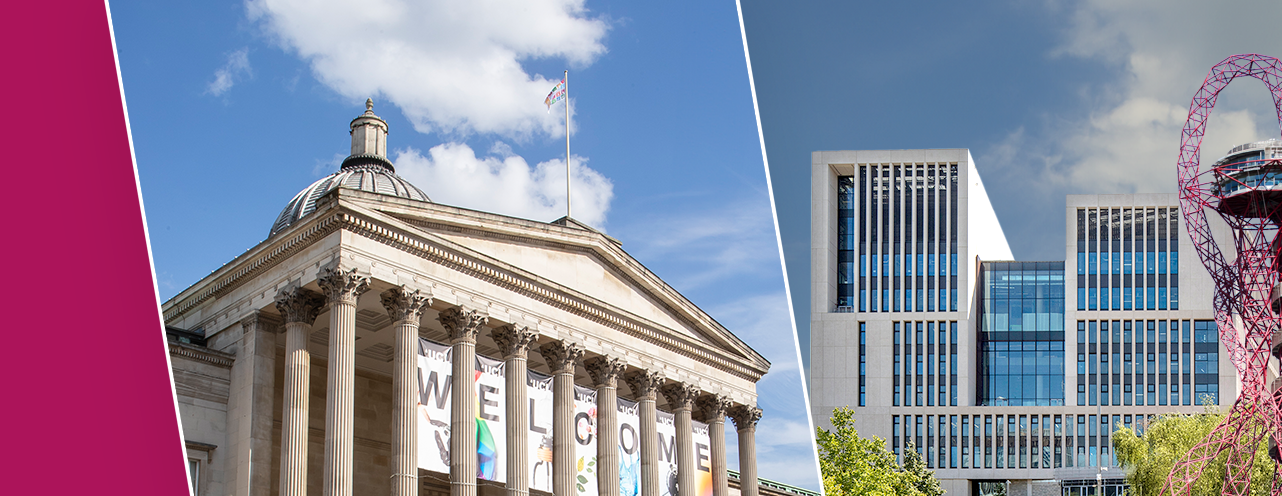
Masters study opportunities at UCL Make your Master’s matter For a real-world advantage, study at a world-class university and your Master’s wi...