Masters Compare - Find your perfect masters course.



Masters Compare - Find your perfect masters course.

 Study Details:
 MSc 2 years full-time, flexible: three to five years
Our habitat today is being fundamentally transformed by revolutions in biotechnology, computation and climate change. Bio-Integrated Design MSc takes these life-changing phenomena as a foundation to explore radical, sophisticated, yet also critical, design solutions to shape our future society.
Our urban environments are being reshaped by breakthroughs in biotechnology, computational design, and the urgent challenges of climate change. UCL’s Bio-Integrated Design master’s degree responds to these shifts by forging innovative approaches to design —ones that are radical, refined, and critically engaged with the demands of our evolving society.
Nature is at the heart of the course—not just as inspiration, but as an active agent within the design process. Students explore solutions that integrate biological, material, and social systems to envision more resilient and responsive future cities.
A minimum of a second-class UK Bachelor’s degree in an appropriate subject or an overseas qualification of an equivalent standard. Applicants will also be asked to submit two short pieces of writing. Details on this will be provided once the completed application has been received by the department.
For fees and funding options, please visit website to find out more.
UCL offers a range of financial awards aimed at assisting both prospective and current students with their studies.
The Bio-Integrated Design MSc is structured to equip students with advanced, interdisciplinary skills and a distinctive design perspective that seamlessly integrates biotechnology, design, and engineering.
Graduates are well-prepared for a wide range of career paths across multiple industries, including roles within research teams, architecture and engineering practices, and innovation-driven design consultancies. In industry, graduates are suited for roles within integrated Research and Development teams, contributing to the creation of innovative products and sustainable solutions for the built environment. The course also provides a strong foundation for further academic research, enabling students to pursue PhD courses or join research laboratories.
Year 1
Compulsory modules
Year 2
Compulsory modules
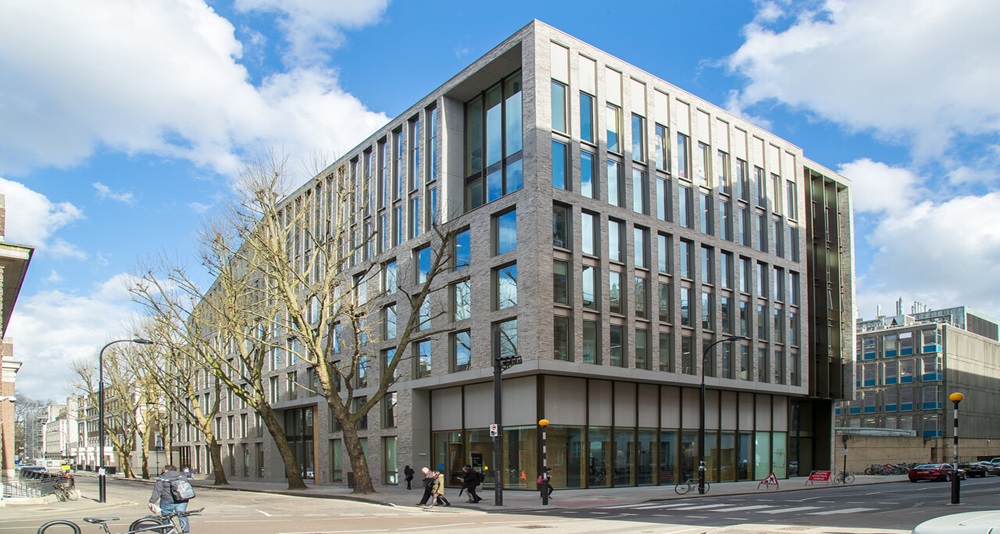
The Bartlett is UCL's multidisciplinary Faculty of the Built Environment. Our vision is a world where the systems and cities we build add to the wellb...