Masters Compare - Find your perfect masters course.




Masters Compare - Find your perfect masters course.

 Study Details: MA 2 years part-time
Discover how reflective practice, applied knowledge and deep self-awareness prepare you to support others through chaplaincy in today’s diverse world. The MA in Chaplaincy at Birmingham Newman University is a flexible, part-time, work-based programme designed for those actively engaged in chaplaincy across a range of settings, including healthcare, education, prisons, the military and urban settings. Rooted in reflective and pastoral development, the course draws on interdisciplinary learning from a range of academic fields including sociology, psychology, philosophy and, where relevant, theology. You will benefit from experiential learning, applied research and reflective practice that connect academic theory with real-world chaplaincy. We welcome individuals from all faith and belief backgrounds. With weekend campus sessions and online support, the programme is structured to suit working professionals while encouraging personal and vocational growth. From your first day, you’ll be part of a university community that values empathy, integrity and development.
We welcome students from all backgrounds and accept a wide range of qualifications. If yours aren’t listed, don’t worry – our Admissions Team can help you explore your options.
A relevant honours degree, 2:2 or above.
You will normally need to be working as a chaplain or similar in a paid or voluntary capacity for the equivalent of 2 sessions a week for each of the modules. One of your referees will need to be a person with direct experience of your practice, ideally also a chaplain. We will discuss your experience at interview.
All applicants will be interviewed in person or by video, you will have the opportunity to ask questions and meet one of the teaching team.
For fees and funding options, please visit website to find out more
What Careers Can I Consider
Graduates of the Chaplaincy MA are well-prepared for senior chaplaincy roles, leadership positions or further academic study. Birmingham Newman University’s Careers and Employability Service offer tailored support through mentoring, expert guidance and access to resources that help you plan your next steps. Many graduates continue in chaplaincy, progressing into leadership or transitioning from voluntary to paid roles, making a positive contribution to the community.
Reflective practice
Understanding spirituality
Applied practice 2
Working with faith and belief in contemporary contexts
Applied practice project 1
Being human in the contemporary world
Chaplaincy: principles and practice
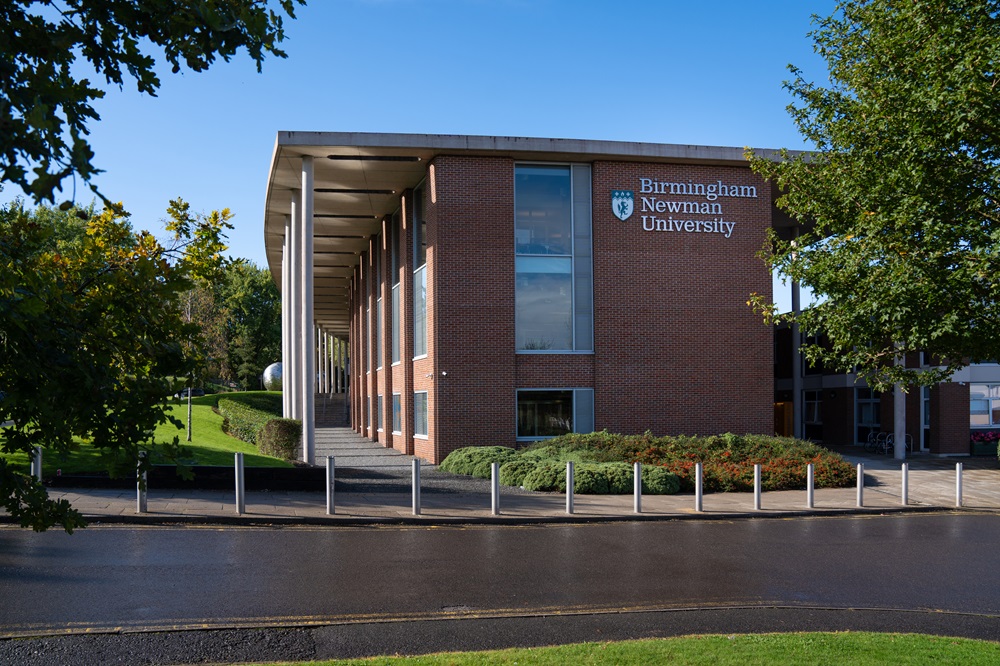
At Birmingham Newman University, we believe in the power of education to transform lives and in the potential of every individual. Our vision is to pr...