Masters Compare - Find your perfect masters course.




Masters Compare - Find your perfect masters course.



 Study Details: 12 months full-time; 24 months part-time
This course addresses the issues associated with a rapidly changing market and the demands for better, cheaper and personalised products, developed within the shortest possible time.
Ecological and ‘green’ constraints weigh significantly on engineering designers already and these pressures are likely to increase very significantly during the careers of today’s students. We consider the need for significant change in the design philosophy employed in industrialised manufacture and product development as well as responses to those pressures including legislation and standards, alternative processes and materials and design for resource economy at small and large scale.
Design engineers are problem-solvers who bridge the gap between traditional engineering and design. It's a discipline that draws on knowledge of product development, technical design, manufacturing techniques and rapid prototyping to bring new innovations to market. It also focuses on improving existing products and the processes used for making them.
Normally a first-class or second-class honours degree (or international equivalent) in a relevant engineering, technology or science discipline.
For fees and funding options, please visit website to find out more
Design engineers use technical knowledge, mathematical and design skills to create innovative solutions to problems across a diverse range of industries.
This course will propel your design engineering career forward because it will:
provide you with the knowledge and skills to develop your own abilities to tackle more complex roles
enhance your CV with a competitive edge through gaining a Masters
develop industry experience through the Postgraduate Group Project module which provides you with first hand industry experience which can be used as example work during any future interviews
Core modules:
Sustainable Product Design & Manufacturing (10 credits)
Digital Manufacturing & Smart Products (10 credits)
Design Methods & Management (10 credits)
Global Design (10 credits)
Product Modelling & Visualisation (10 credits)
Sustainable Product Design & Manufacturing (10 credits)
Postgraduate Group Project (40 credits)
Postgraduate Individual Project (60 credits)
Sustainability (10 credits)
Systems Thinking & Modelling (10 credits)
Remanufacturing (10 credits)
Optional modules:
Manufacturing Automation (10 credits)
Fundamentals of Lean Six Sigma (10 credits)
Strategic Technology Management (10 credits)
Enterprise Resource Planning (10 credits)
Engineering Risk Management (10 credits)
Total Quality Management (10 credits)
Advanced Materials & Production Technology (10 credits)
Design Form & Aesthetics (10 credits)
Human Centred Design (10 credits)
Supply Chain Operations (10 credits)
Management of Innovation (10 credits)
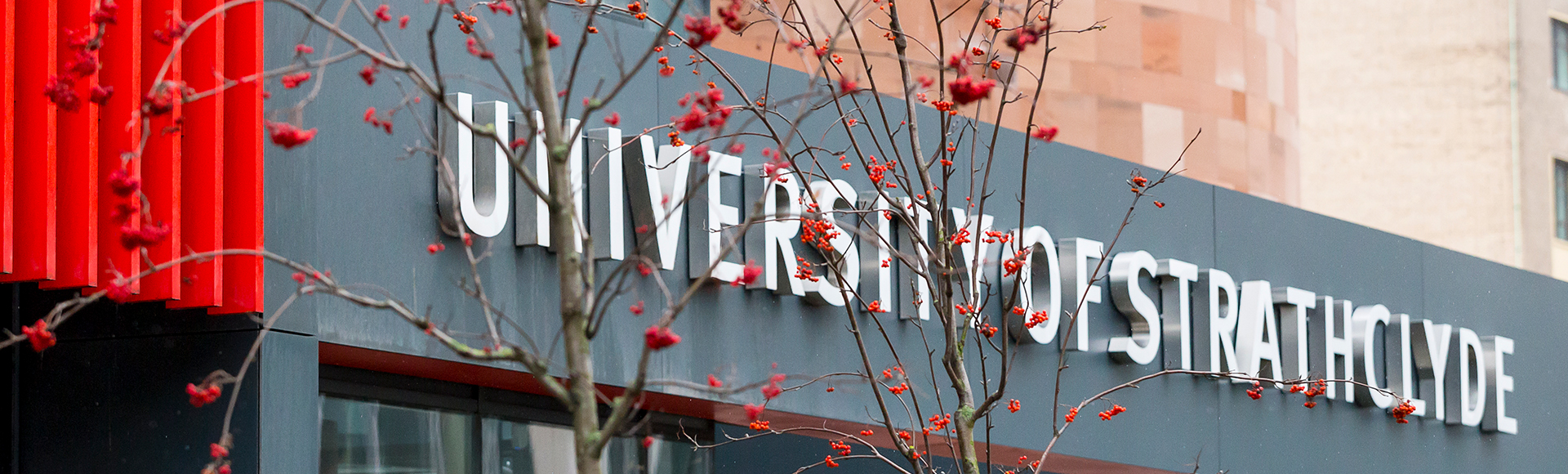
The place of useful learning The University of Strathclyde is a leading international technological university located in the heart of Glasgow – one ...


 Mon 16 Mar 2026