Masters Compare - Find your perfect masters course.



Masters Compare - Find your perfect masters course.

 Study Details:
 MA 1 year full-time
Do you have a passion for documentary filmmaking and telling stories where real life is often stranger than fiction? Do you want to shed light on the pressing social issues? On our MA Documentary Filmmaking course, we’ll help you hone your voice as a documentary filmmaker and guide you as you take those first steps into the industry. Whether it’s a one-hour documentary or a five-minute film, you will learn the craft of documentary filmmaking: how to tell a cracking story and keep your audience on the edge of their seats.
From specialist factual to factual entertainment and from reality TV to current affairs, you’ll also benefit from a range of industry engagement and live brief opportunities, which will enable you to work on real world projects.
As part of this master’s degree in documentary filmmaking you’ll receive expert instruction and guidance from working producers and filmmakers, who will be able to provide you with the concepts, techniques and processes that are key to the TV documentary form.
In addition to quality teaching and a wealth of opportunities, this course has an enviable reputation for producing award winning films (Previous students have been nominated for RTS Student TV Awards and won the prestigious BBC Arabic Film Festival). Many graduates have gone on to work for BBC, ITV independent production companies in the UK and internationally.
What’s more, you’ll be able to take advantage of the TV production grade facilities that our exciting MediaCity campus has to offer, collaborating with your fellow students to produce innovative content. And studying at Salford is about much more than the course. You’ll be located at the heart of one of the country’s most reputable media hubs, where you’ll join a vibrant community of practicing creatives.
To join this MA you should have a second class honours degree, 2:2 or above, with an appropriate amount of media production, technology and design experience.
For the MA programmes in media production you will be required to submit a project proposal related to your chosen specialist field to support your application.
International applicants will be required to show a proficiency in English. An IELTS score of 6.5, with no element below 5.5, is proof of this.
For fees and funding options, please visit website to find out more
Please visit our website to find out about available funding
If you’ve always wanted to work in TV documentary production, this MA documentary filmmaking course will open up a range of exciting career opportunities. With the knowledge, practical skills and confidence gained throughout their degree, many of our recent graduates have gone on to secure professional roles in a variety of areas, including producing, directing and journalism.
On this MA we bring industry into the classroom. You will be working up close with documentary makers, producers and directors and you will find out how to put together a gripping story that will hook your viewers.
This MA will give you an insight into the industry so that you can apply for jobs and start in them as soon as you finish the course. Many of our MA alumni have done exactly that.
Graduates of this course have also forged successful careers in broadcasting, with roles including camera operators, editors and sound assistants, while others are currently employed by the BBC, ITV, Channel 4 and a range of independent media companies across the UK.
Core Modules
Media Theory and Practice
Creative Development Projects
Collaborative Projects
Advanced Production Practices
Production Craft
Choose one module from:
Major Project: Practice Research Project
Major Project: Dissertation
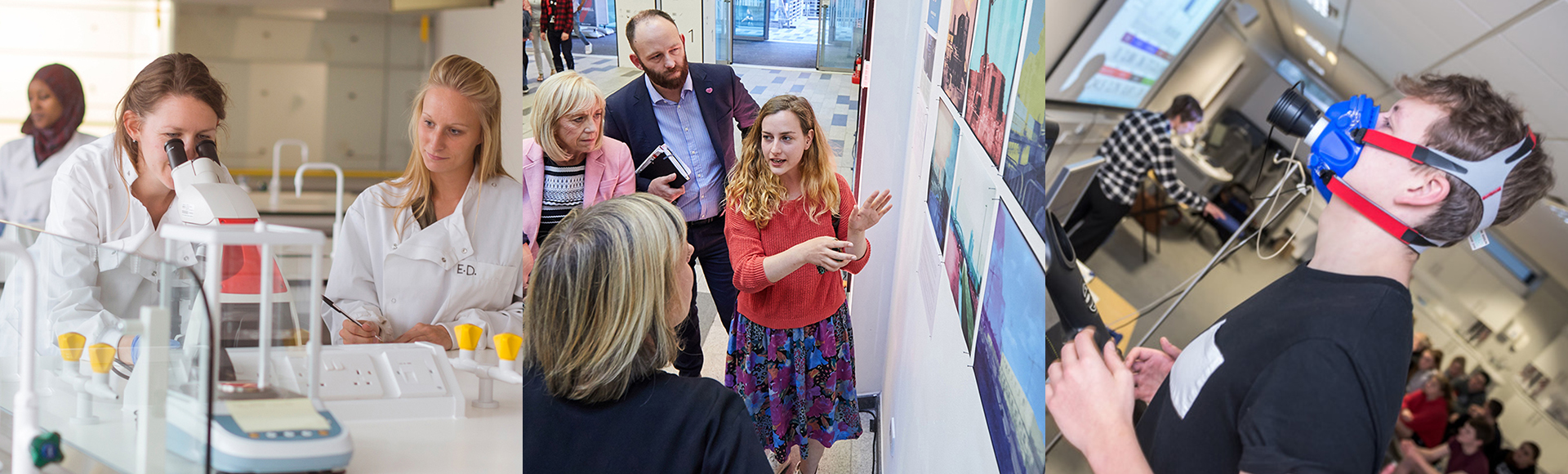
Once at the heart of Britain’s Industrial Revolution, the University of Salford is now the home of 21st century creativity and learning. Its up-to-the...