Masters Compare - Find your perfect masters course.



Masters Compare - Find your perfect masters course.

 Study Details: 1 year - 5 years
This one-year master’s course gives you the skills to analyse complex energy issues and the environmental challenges linked to them, supporting careers in sustainability. It focuses on energy transition and climate change, which are transforming global economies. The course provides rigorous interdisciplinary training in energy and environmental economics, policy, and modelling, alongside specialist options that allow you to deepen your expertise and pursue your interests.
The Economics and Policy of Energy and the Environment MSc explores how economic systems, policy decisions, and markets shape energy use and sustainability outcomes. You will develop a strong understanding of energy, climate, and related environmental challenges, and how they are addressed by business, finance and government.
Normally a minimum of an upper second-class UK Bachelor’s degree in a relevant discipline (economics, economics-plus, a science or engineering subject) or an overseas qualification of an equivalent standard. A non-quantitative degree may, however, be considered, provided that aptitude is demonstrated for quantitative analysis, e.g. through some undergraduate modules, and/or through A levels or overseas equivalents. These requirements may be relaxed for students who can demonstrate considerable and relevant aptitude and experience, for example, in business or government. Please clearly state in your personal statement how your educational or employment background (including any internships or projects) relates to the programme and what you aim to achieve through your studies.
For fees and funding options, please visit website to find out more.
UCL offers a range of financial awards aimed at assisting both prospective and current students with their studies.
Normally a minimum of an upper second-class UK Bachelor’s degree in a relevant discipline (economics, economics-plus, a science or engineering subject) or an overseas qualification of an equivalent standard. A non-quantitative degree may, however, be considered, provided that aptitude is demonstrated for quantitative analysis, e.g. through some undergraduate modules, and/or through A levels or overseas equivalents. These requirements may be relaxed for students who can demonstrate considerable and relevant aptitude and experience, for example, in business or government. Please clearly state in your personal statement how your educational or employment background (including any internships or projects) relates to the programme and what you aim to achieve through your studies.
Compulsory modules
Optional modules
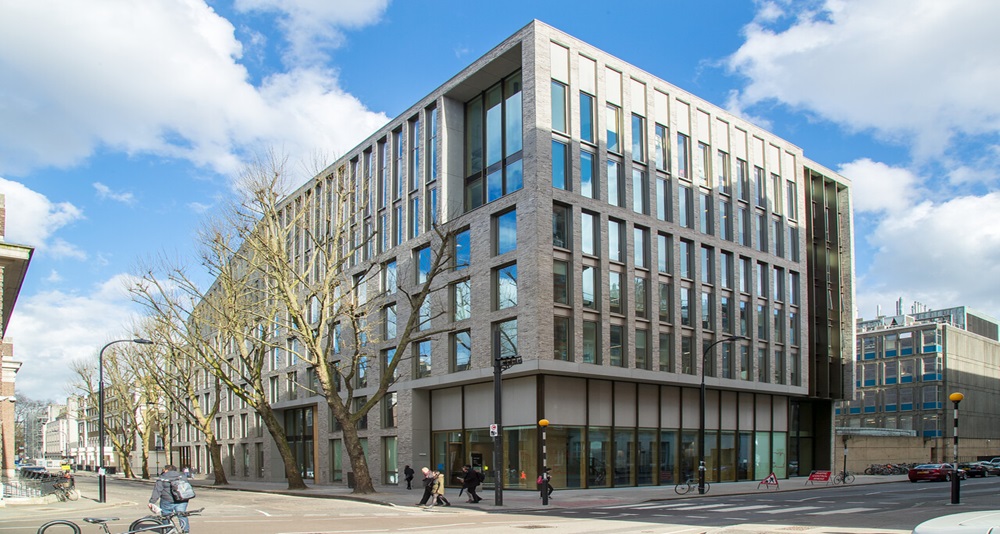
The Bartlett is UCL's multidisciplinary Faculty of the Built Environment. Our vision is a world where the systems and cities we build add to the wellb...