Masters Compare - Find your perfect masters course.



Masters Compare - Find your perfect masters course.
 Study Details: 12 months full-time
The electricity supply industry is undergoing a profound transformation to integrate distributed energy sources and adapt to evolving patterns or electricity consumption. This transition is creating exciting new opportunities, and a growing demand, for a highly-skilled workforce capable of leading and driving these changes. The MSc Electrical Power & Energy Systems is designed to respond to this demand, equipping you with the expertise to contribute to the dynamic and fast-changing energy sector.
Delivered by the Department of Electronic & Electrical Engineering, the course brings together advanced expertise in all aspects of electrical energy and power systems, complemented with studies in electricity markets and power system economics.
You'll explore the underpinning technologies of the power sector, alongside the user and application requirements that define modern energy systems.
Normally a first-class or second-class honours degree (or international equivalent) in electronic, electrical, power or energy engineering, or a related subject.
This MSc provides the advanced knowledge and technical expertise required for exciting, well-paid, and impactful careers in the fast-paced and dynamic power and energy sectors. Graduates are equipped to take on challenging roles across the global energy landscape, including:
power generation, supply, and distribution
network operation and grid management
renewables, low-carbon, and clean energy technologies
Recent graduates have secured professional and technical positions as electrical engineers, power systems specialists, and distribution and asset managers in leading national and multinational energy utilities such as Iberdrola, EDF Energy, ScottishPower Energy Networks, and China State Grid.
Core modules:
Advanced Power & Energy Systems (20 credits)
Power System Economics, Markets & Asset Management (20 credits)
Assignment & Professional Studies (20 credits)
Optional modules:
Power Electronics for Energy & Drive Control (20 credits)
High Voltage Technology & Electromagnetic Compatibility (20 credits)
Wind Energy & Distributed Energy Resources (20 credits)
Sensor Technologies (20 credits)
Power Electronics Devices, Drives & Machines (10 credits)
Data Analytics & AI for Energy Systems (10 credits)
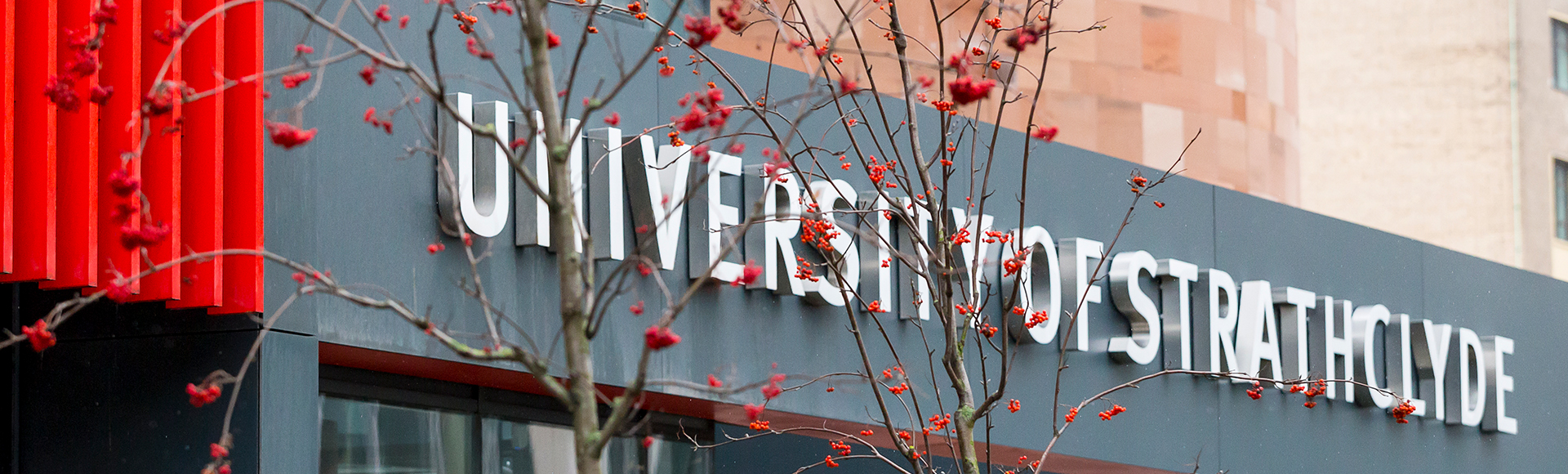
The place of useful learning The University of Strathclyde is a leading international technological university located in the heart of Glasgow – one ...