Masters Compare - Find your perfect masters course.



Masters Compare - Find your perfect masters course.


 Study Details: 1 -3 years
Find out about courses, learn about the application process, and discover how we can help you achieve your professional goals.
This programme is accredited by the Chartered Management Institute (CMI). Students of this programme will graduate with the dual award of a Bangor University Masters and a Level 7 Diploma in Strategic Management and Leadership.
This course is approved by the Institute of Sustainability and Environmental Professionals (ISEP).
This one-year course is intended for students with a keen interest in integrating environmental management with business practices. It includes free membership to ISEP, the Institute for Environmental and Sustainability Professionals. The role of the corporate environmental manager is becoming increasingly complex and strategic. Corporate social and environmental responsibility is becoming prominent in consumer demand and a pre-requisite for tender eligibility. This necessitates a more sophisticated environmental manager who can interpret legislative and audit requirements and deliver them in a manner conducive to continued economic development, whilst recognising the market trends. The aim of this programme is to develop skills in the delivery of economic activities related to environment, green technology and sustainability. The programme includes highly topical case studies from across these sectors reflecting changing strategies and alternative approaches. The course is suitable for graduates in a wide range of disciplines, including Environment, Engineering, Finance, Social Sciences and other subjects.
"The MBA is a fantastic chance for me – not only is it carrying on and expanding with the environmental side that I learnt in my undergraduate degree, putting my knowledge into a more realistic context, but it is also teaching me about how businesses function on both a human and financial side which will be vital after university." CHARLIE WILD
"Studying the MBA Environmental Management is one of the best decisions I have ever made. The course has put many things into perspective and I have learnt so much in such a short space of time that I know I will benefit from in the future. The course is like having the best of both worlds as you are able to access two knowledge-pools, both of which have expertise in all types of fields." BECCA JONES (Full profile)
Organisations and People: This module examines key issues arising from contemporary research in organisational behaviour (OB) and human resource management (HRM). It provides an integrated analysis of management, organisations and people, developing the conceptual, strategic and practical skills necessary for managers in complex, global organisational contexts. Specific topics include:
Entry to the MBA in Environmental Management programme requires a 2(ii) undergraduate degree in a relevant subject, e.g Environmental Science or Business Studies from a university, or a similar qualification from any other institution. Alternatively, possession of a suitable professional qualification and relevant practical experience may also be accepted. In general, however, applicants are judged on their individual merits and age, work experience and other factors are also considered. For MBA degrees, whilst work experience is desirable, it is not essential.
If your native language is not English, you must provide satisfactory evidence that you have an adequate knowledge and understanding of written and spoken English:
It may be necessary for applicants falling short of this minimum standard to attend an intensive English Language course before registering for the academic programme. Such a course is available at Bangor, and full details and an application form may be obtained here.
Compulsory modules
Organisations and People: This module examines key issues arising from contemporary research in organisational behaviour (OB) and human resource management (HRM). It provides an integrated analysis of management, organisations and people, developing the conceptual, strategic and practical skills necessary for managers in complex, global organisational contexts. Specific topics include:
International Strategic Management: This module analyses strategic decision-making within business. You will develop a critical understanding of the strategic processes of business management, the interconnections with the functional domains of marketing, human resource management and corporate finance, and the management of knowledge systems. Specific topics include:
Management Research: This module analyses the philosophical basis for research in the management sciences, and examines a number of key methodological issues and approaches. Research designs for both quantitative and qualitative research methodologies are developed, including interviews, case studies, focus groups, surveys and experiments. Specific topics include:
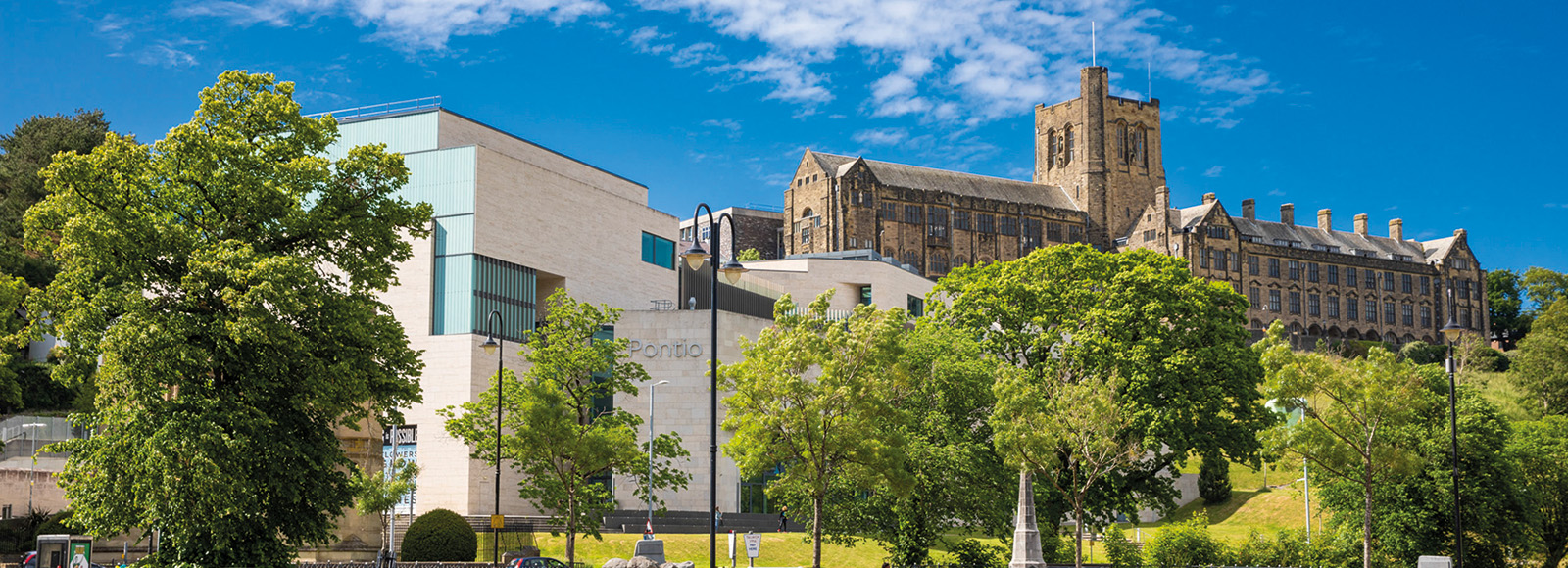
Your Future in Action. Nestled between the mountains and the sea in North Wales, Bangor University offers a postgraduate experience shape...