Masters Compare - Find your perfect masters course.




Masters Compare - Find your perfect masters course.
 Study Details:
MASc 1 year full-time 2 years part-time 5 years flexible
Global Urbanism MASc explores how cities are made, contested and transformed through engaged urban research. You develop the critical, creative and collaborative skills to understand urban change across different contexts and contribute to research, policy and practice for fairer cities.
Urban challenges are not abstract. Housing inequality, migration, climate pressures, cultural change, contested heritage and uneven access to resources are felt in homes, streets, neighbourhoods and public spaces. Global Urbanism MASc explores how cities are made and contested, and how researchers, artists, curators, policymakers, activists and communities work together to understand urban change and create fairer futures.
The course brings together urban research, fieldwork, creative practice and public engagement. You examine how urban knowledge is produced, whose voices shape urban futures, and how different disciplines and practices can work together. Through critical theory, mapping, ethnography, archives, interviews, visual methods and curatorial approaches, you develop ways to understand urban issues and communicate research beyond academic settings.
A minimum of an upper second-class Bachelor’s degree from a UK university or an overseas qualification of an equivalent standard.
For fees and funding options, please visit website to find out more
This postgraduate degree trains an emerging generation of urbanists to undertake advanced, experimental, collaborative research, driven by the pressing agendas set by the Sustainable Development Goals and other international policy and practice directives. Graduates will be qualified to address the complexity of cities and urbanisation creatively, and the global challenges and potentials that they present.
The course provides the relevant skills and knowledge for those working in, or aiming to develop a career in, built environment and urban policy and practice positions that require a sophisticated understanding of the contexts and complexity of urban challenges and development in cities internationally. Graduates will be suited to a wide range of urban and built environment careers that engage with processes of urban change and design, community participation, inclusive urban development and governance. The creative problem-solving, analytical, collaboration and presentation skills which students develop will also provide a good preparation for doctoral study and professional research positions.
Compulsory modules
Optional modules
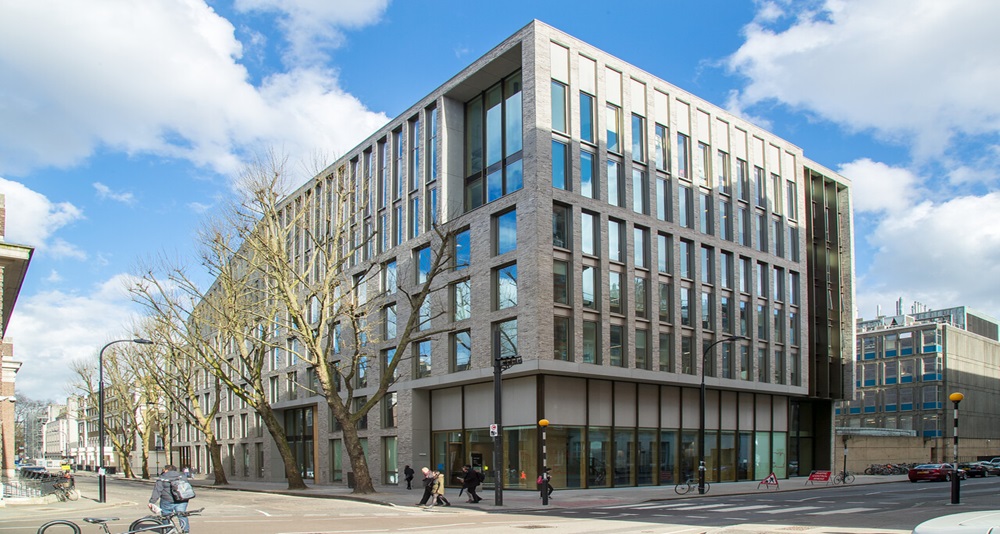
The Bartlett is UCL's multidisciplinary Faculty of the Built Environment. Our vision is a world where the systems and cities we build add to the wellb...