Masters Compare - Find your perfect masters course.




Masters Compare - Find your perfect masters course.

 Study Details: 1 year - 5 years
UCL's Infrastructure Investment and Finance MSc equips students with the analytical skills and industry knowledge to manage and finance major infrastructure projects globally. Combining economics, finance, and policy, the course is ideal for professionals aiming to shape sustainable, large-scale infrastructure development in both public and private sectors.#
Global demand for infrastructure is rising, yet traditional public funding sources are increasingly constrained. Bridging the infrastructure gap now relies heavily on private capital. The Infrastructure Investment and Finance MSc addresses this challenge by equipping students with the knowledge and skills to navigate the complex intersection of infrastructure development, financing, and policy.
A minimum of an upper second-class Bachelor’s degree from a UK university in a relevant subject (including engineering, mathematical-based science, built environment, economics and finance), or an overseas qualification of an equivalent standard. In exceptional cases, a lesser academic qualification combined with substantial professional experience and demonstrable academic ability will allow acceptance onto the programme.
For fees and funding options, please visit website to find out more
UCL offers a range of financial awards aimed at assisting both prospective and current students with their studies.
Top industry sectors for Bartlett School of Sustainable Construction graduates in work are construction, built environment and property (35% of graduates); accountancy and financial services (24%); manufacturing (7%); IT and tech (5%); and consultancy (5%).
83% of Bartlett School of Sustainable Construction graduates were in work or further study 15 months after graduation. (Graduate Outcomes Survey 2017-22)
Bartlett School of Architecture graduates are working in 43 countries around the world.
(source: Graduate Outcomes Data 2017-2022)
Compulsory modules
Optional modules
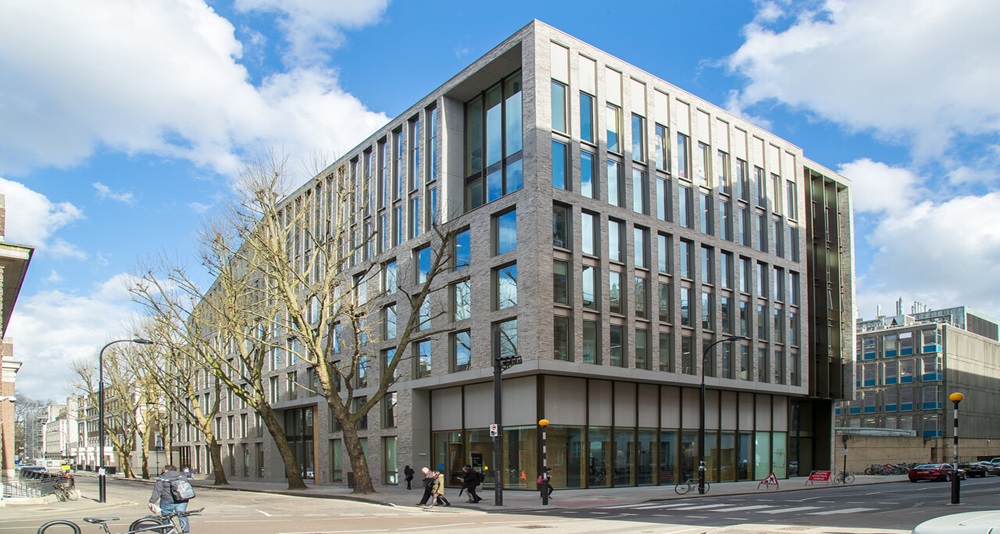
The Bartlett is UCL's multidisciplinary Faculty of the Built Environment. Our vision is a world where the systems and cities we build add to the wellb...