Masters Compare - Find your perfect masters course.




Masters Compare - Find your perfect masters course.



 Study Details: Full time 1 year, Part time 2 years
The Earth is faced with unprecedented and interconnected environmental challenges. From biodiversity loss to climate change, these complex problems demand both critical thought and action to understand and to help us to live with a changing planet. Yet environmental issues are simultaneously political, technological and cultural, and produce profound inequalities in terms of wealth, prosperity, power and justice. This unique MA Political Ecology develops your ability to think critically about society and how we tackle environmental and social issues, injustices and inequalities. It will equip you with the skills to ask and respond to the difficult questions of human-environment relations, to confront and challenge the status quo, and crucially, to help drive transformative action for a better and fairer world. This will make you attractive to employers across the spectrum of politically conscious and action-oriented organisations.
Anyone seeking to address the environmental injustices and unequal power relations that permeate throughout the world today, either through job roles or further research.
We draw upon political ecology’s multi-dimensionality and emphasise the importance of interdisciplinary perspectives. This holistic approach develops your skills in:
The MA in Political Ecology focuses on a range of themes including the politics of resource extraction, water, climate politics and the green economy. To do this, we believe passionately that true learning is about dialogue and critical reflection, and not just about lectures. Through a series of core and optional modules, we offer novel approaches to learning and teaching, engaging you in creative classes, both inside and outside of the lecture theatre, that provide the means to understand our complex planet of human-environment relations and how society might address and overcome some of the challenges of living on Earth.
The final phase of your Master’s is a dissertation project. You can choose to work alongside one of our world-leading academics or one of our industry partners on a topic relevant to political ecology.
2:2 Hons degree (UK or equivalent) in Social Sciences, Developmental Studies or Geography.
We may also consider non-standard applicants with a 2:2 degree in a subject not noted above, alongside extensive relevant work experience or similar training, such as work with environmental policy and practice, NGOs or activist networks.
For fees and funding options, please visit our website to find out more.
Graduates of the MA Political Ecology will have the skills and knowledge that make you attractive to employers across the spectrum of politically conscious and action-oriented organisations. Whether you embark on a career within government by advocating for policy changes; work for a business to transform their sustainability practices; or a enter role within the NGO sector, we envisage that you will be able to shape the world through transformative action. Our recent graduates are proving this! They currently occupy roles as:
Examples of potential careers also include:
Core
Approaches to Political Ecology
Dissertation Project (60 credit)
Encountering Political Ecology
Perspectives on Environment and Development
Planning Independent Research
Research Methods in the Social Sciences
Optional
Anthropology of Policy
Climate Change and Society
Conflict Management and Contemporary Conflicts
Contemporary Debates in Global Social Theory
Environmental Governance and Management
Environmental Law
Global Environmental Politics
International Human Rights Law
International Relations and Politics of South Asia
Issues and Practice in Diplomacy and Foreign Policy
Major Approaches to the Study of International Relations
Making Research Count: Engaging with Quantitative Data
Politics and International Relations of the Middle East
Politics and Policymaking of Immigration
Public Policy
The European Union
Theorising Security and War
Theory and Concepts in Diplomacy and Foreign Policy
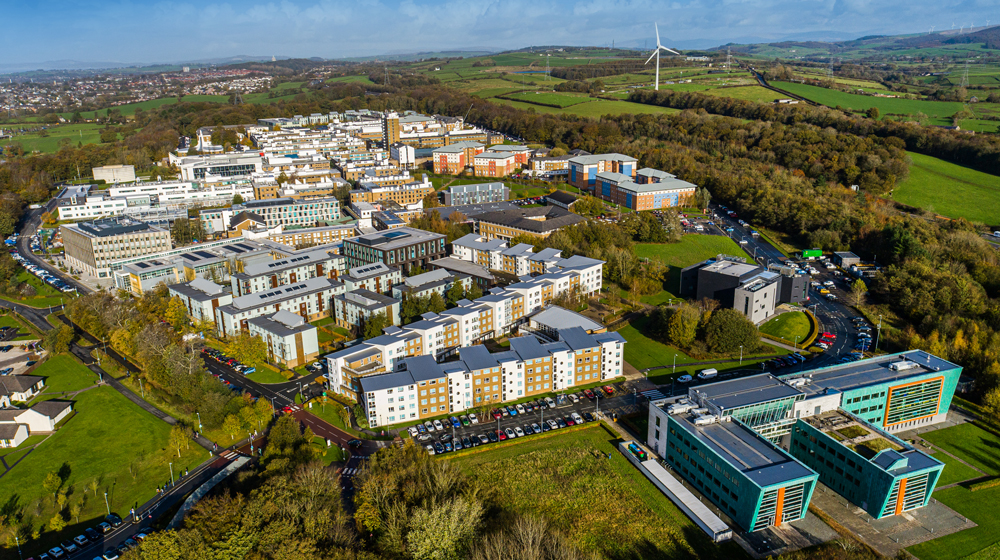
Global reputation and research excellence Lancaster is a top 10 UK university (Complete University Guide 2026) set on a 578‑acre parkland campus in n...