Masters Compare - Find your perfect masters course.




Masters Compare - Find your perfect masters course.

 Study Details: 1 year - 5 years
Space Syntax MSc explores architecture and urban design through the lens of people and space. This multidisciplinary master’s degree offers specialised knowledge to those interested in the research and design of the built environment, from architectural to urban scales. It is designed for individuals aiming to pursue an academic pathway or to deepen their expertise within their current professional practice.
How can we design buildings and cities that truly work for people? Developed and taught by UCL’s internationally renowned Space Syntax Laboratory, this postgraduate degree explores that question by combining architecture, urbanism, and data-driven spatial analysis. At its heart is Space Syntax—a powerful theoretical and analytical framework for understanding how spatial design shapes social, economic and environmental outcomes.
Normally a minimum of a lower second-class Bachelor's degree from a UK university or an equivalent overseas qualification in an architectural or urban design related subject is usually required. Consideration will also be given to applicants from other fields, particularly human geography, anthropology and archaeology, and to applicants with degrees of a lower classification if they have considerable senior-level professional experience in the field. For applicants without a first degree or full professional membership, but with relevant and substantial work experience in the field, a special qualifying examination may be set; details are available from the Bartlett's Graduate Faculty Office.
For fees and funding options, please visit website to find out more
UCL offers a range of financial awards aimed at assisting both prospective and current students with their studies.
Students enrolled in Space Syntax MSc will acquire a blend of analytical, technical, and research-driven skills that are highly applicable in urban planning, architecture, and spatial data analysis. These include:
Research and critical thinking: Training in rigorous academic research methods and critical evaluation of architectural, urban and spatial theories.
Spatial analysis and modelling: Proficiency in using space syntax methodologies to evaluate spatial configurations and predict human behaviour in built environments.
Geospatial data handling: Experience working with spatial datasets, including GIS tools and custom space syntax software, for urban analysis.
Urban design and planning: Skills to assess and influence the design of cities, public spaces, and transport systems using evidence-based spatial strategies.
Computational design thinking: Ability to use computational techniques and algorithms to solve real-world urban and architectural problems.
Data-Driven Design Evaluation: Ability to link spatial data with behavioural, social, and economic patterns, enhancing evidence-based decision-making in urban and architectural contexts.
Presentation and communication: Development of skills to present complex spatial data and design proposals clearly to both technical and non-technical audiences.
Compulsory modules
Optional modules
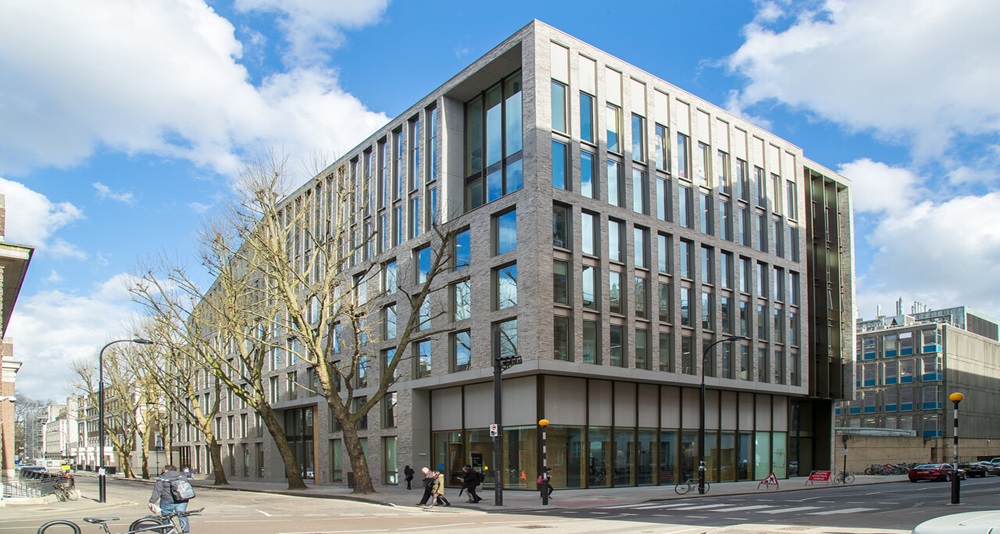
The Bartlett is UCL's multidisciplinary Faculty of the Built Environment. Our vision is a world where the systems and cities we build add to the wellb...