Masters Compare - Find your perfect masters course.



Masters Compare - Find your perfect masters course.



 Study Details: 1 academic year 2 academic years 5 academic years
Globally we are unsustainably using our natural resources, causing major environmental, social and political challenges. This master’s degree in sustainability equips you with the skills and knowledge for a career driving change across business and policy, promoting efficient, circular, equitable and sustainable resource use. Our interdisciplinary curriculum focuses on the environmental, social, and economic aspects of managing resources from public policy and business perspectives.
A minimum of an upper second-class Bachelor's degree from a UK university or an overseas qualification of an equivalent standard in an appropriate subject (earth science, economics, political sciences, geography, physical sciences, law, engineering or related subject). These requirements may be relaxed for students who can demonstrate considerable and relevant aptitude and experience, for example, in business or government. Please clearly state in your personal statement how your educational or employment background (including any internships or projects) relates to the programme and what you aim to achieve through your studies.
For fees and funding options, please visit website to find out more
UCL offers a range of financial awards aimed at assisting both prospective and current students with their studies.
Upon graduation, you will have a comprehensive understanding of the key challenges surrounding sustainable resource use, supply and demand drivers, and future strategies for global resource management. You will be well-versed in various methods, models, and concepts, including the Resource Nexus, material flow analysis, life cycle analysis, footprints, macroeconomics, policy mixes, foresight and scenario techniques and, depending on your chosen optional modules, water-energy-food modelling and behavioural economics. Additionally, you will develop valuable skills for future employment, such as effective communication, teamwork, problem-solving, decision-making under uncertainty, intercultural communication, interdisciplinary collaboration, and working in business contexts.
Compulsory modules
Optional modules
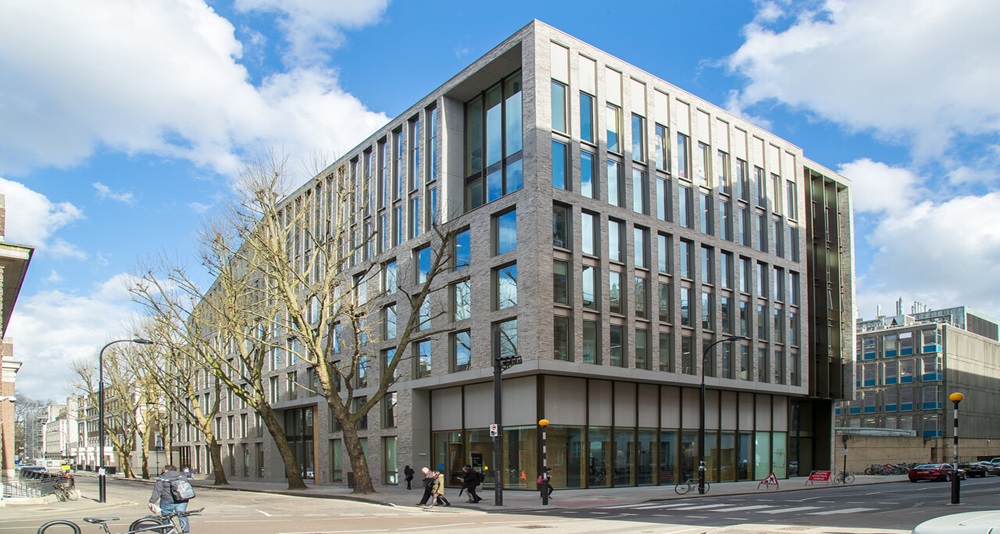
The Bartlett is UCL's multidisciplinary Faculty of the Built Environment. Our vision is a world where the systems and cities we build add to the wellb...