Masters Compare - Find your perfect masters course.




Masters Compare - Find your perfect masters course.
 Study Details: 1-2 Years
Are you a radiographer, radiologist, healthcare professional, or professional affiliated to medical imaging, e.g. physiotherapist, emergency physician or advanced clinical practitioner looking to enhance your expertise? Our MSc Medical Imaging will equip you with knowledge of advanced imaging techniques, research methods, and evidence-based clinical practice to support your progress toward consultant practitioner roles. We offer two different routes - General Medical Imaging and specialist ultrasound pathways in Musculoskeletal Ultrasound and Focused Assessment with Sonography for Trauma. All routes follow the same overarching structure. CASE accreditation is currently being sought for the specialist ultrasound pathways in Musculoskeletal Ultrasound and Focused Assessment with Sonography for Trauma.
Aligned with the Society and College of Radiographers (SCoR) education and career framework, our curriculum’s core modules focus on transitioning into advanced practice, developing your clinical and development portfolio, and enhancing your research skills. The programme covers anatomy, pathology, physiology, and the physical principles of medical imaging, enabling you to adapt to a wide range of imaging procedures.
You will deepen your understanding of the key scientific principles and concepts that underpin specific areas of medical imaging, advance your imaging procedures and techniques, and apply these within a clinical setting. In addition, you will enhance your ability to critically appraise research evidence, improve patient care and service delivery, and contribute to the development of service improvements.
A range of optional modules cover a range of related themes to broaden your knowledge, including digital technologies and innovation within public health, leading and complexity, how policy is shaped within healthcare practice, children and medicine, and clinical effectiveness.
With a flexible delivery mode, we blend online learning with real-world clinical application, and you’ll develop critical thinking and clinical reasoning together with leadership capabilities, skills which are essential for your career progression.
2:2 degree in an engineering, science, medicine, or health subject
or
demonstrated professional or relevant qualifications or experience
You will also need: an English language qualification
Graduates of the MSc may look to transition into educational positions such as:
Clinical Educator / Mentor in ultrasound or radiography
University Lecturer / Module Leader in Medical Imaging
Simulation Lead for ultrasound-based training
Clinical Skills or POCUS Faculty for professional bodies
PgCert (60 credits):
General imaging pathway compulsory modules
Transition into Advanced Practice (RDI-40023, 15 credits)
Transition into applications for Advanced Practice (RDI-40025, 15 credits)
Clinical and Developmental Portfolio (Medical Imaging) (RDI-40027, 30 credits)
Musculoskeletal Ultrasound pathway compulsory modules
Physics and Technology of Medical Ultrasound (RDI-40021, 15 credits)
Application of diagnostic ultrasound: musculoskeletal examination, evaluation and reporting (RDI-40017, 15 credits)
Clinical Application of Diagnostic Ultrasound to Practice (RDI-40015, 30 credits)
Focused Assessment with Sonography for Trauma pathway compulsory modules
Physics and Technology of Medical Ultrasound (RDI-40021, 15 credits)
Application of diagnostic ultrasound: FAST scan examination, evaluation and reporting (RDI-40019, 15 credits)
Clinical Application of Diagnostic Ultrasound to Practice (RDI-40015, 30 credits)
PgDip (120 credits)
PgCert modules plus:
Research Methods in Health (HLT-40001, 15 credits)
Optional modules in the four pillars of practice (Education, Research, Clinical, Management).
MSc (180 credits)
PgDip modules plus:
Master's Dissertation in Faculty of Health (PTY-40044, 60 credits)
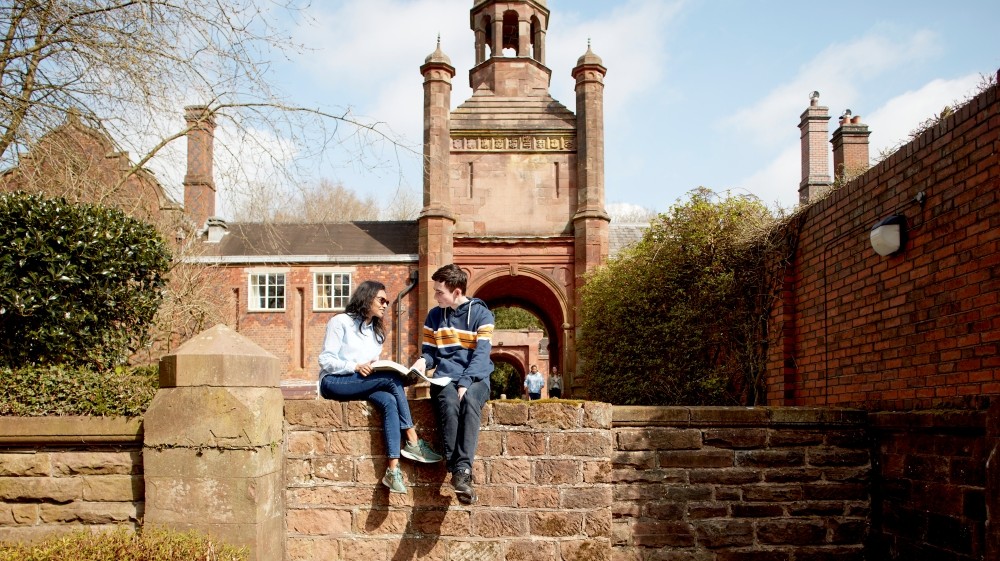
At Keele, we’re proud to offer a diverse range of career-focused courses and a thriving student life on our beautiful 600-acre campus, with everything...


 Wed 02 Dec 2026
