Masters Compare - Find your perfect masters course.




Masters Compare - Find your perfect masters course.
 Deadline: 06 December 2026
 Wales

Open to: UK and international applicants
Funding Providers: ESRC Welsh Graduate School for the Social Sciences (WGSSS)
Subject Area: Environmental Planning
Project Start Dates: October 2027
** (Please see the note below regarding potential later start dates.)
**In exceptional circumstances, and subject to the discretion of the University and/or the relevant funding body, a deferral of offer may be granted to the next available enrolment period. Such deferral will typically not exceed a duration of three calendar months from the originally stipulated commencement date. Please note that only one deferral may be considered, and any such deferral is not guaranteed.
Supervisors:
This studentship is an ‘open’ award. Applicants must approach a potential supervisor prior to submitting an application. This is to confirm that there is appropriate supervisory capacity within the University and to discuss their draft application of which the supervisor must complete a section. Information on the research interests of our staff can be found on the Swansea University webpages. Short descriptions of each accredited pathway are available on the ESRC WGSSS website. The Swansea-based representative for the pathway, Dr Cai Ladd, [email protected], might be able to advise you.
Aligned programme of study: Environmental Planning pathway, PhD WGSSS DTP
Mode of study:
Full or part-time study is possible. Please note that full-time ESRC WGSSS studentship award holders cannot hold either a full-time job, permanent part-time job or temporary role for an extended period, during the period of their award. Part-time ESRC WGSSS studentship award holders cannot hold a full-time job.
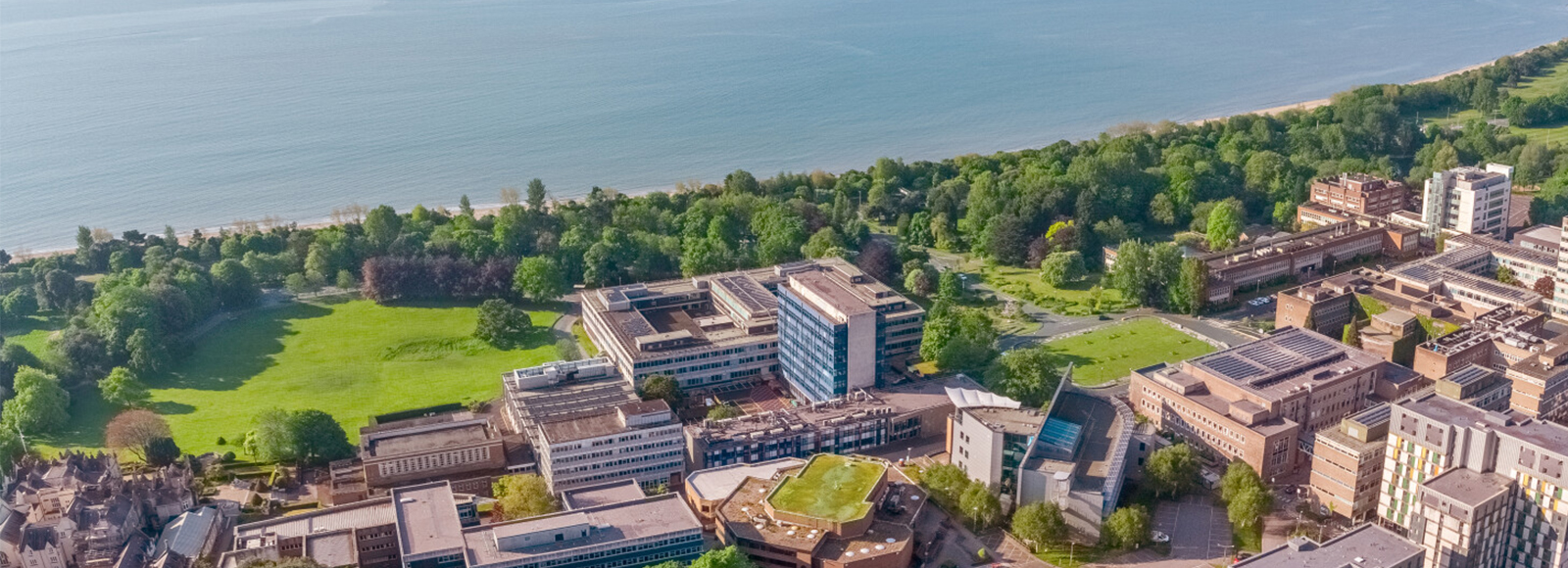
Place of study:
Project description:
Environmental planning examines the spatial dimensions and decision-making processes for the sustainable management of the relationships within and between natural and human systems. This interdisciplinary PhD training pathway bridges social and natural environmental sciences. It focusses on key environmental challenges, and their manifestation in Wales, the UK and globally, reflecting current policy challenges for Welsh and UK governments in the environmental sector. Major concerns include but are not limited to: impacts and management of climate change; local and regional environmental quality; conservation management; and post-Brexit environmental legislation.
The Department of Geography at Swansea is a vibrant and dynamic place for interdisciplinary doctoral studies. Our academics have a long history of successfully training PhD students for careers in the public, private, and third sectors, as well as in academia. Our staff have a wide range of expertise central to this pathway including quantifying and mitigating climate change, landscape carbon dynamics, flood management, pollution, environmental hazard management, wildfire mitigation, environmental archaeology, GIS and remote sensing applications, and cultural, urban, political, and economic geography. We are working in close collaboration with public and private sector organisations (e.g. DEFRA, Forest Research, Natural Resources Wales, MetOffice, UK National Parks, Fire and Rescue Services, Home Office, UK water companies and the Health Sector).
As part of the WGSSS, the Environmental Planning pathway is founded on longstanding institutional links between Swansea University’s Department of Geography, Cardiff University’s School of Geography and Planning, Aberystwyth University’s Department of Geography and Earth Sciences, Bangor University and the Countryside and Community Research Institute at the University of Gloucestershire. The departments collaborate extensively in PhD supervision, externally-funded research projects and postgraduate training.
Training is provided through a coordinated programme of standalone and residential modules in quantitative and qualitative social science methods, and science communication and a cohort-building postgraduate conference with participation from across the pathway. Options for specialist training include GIS and spatial data analysis, advanced quantitative research in SPSS, transport modelling, calculating environmental footprints, living lab methodologies, conservation research, randomized response techniques, cost-benefit analysis, spatial economic modelling, and satellite and drone remote sensing.
Applications may be submitted in Welsh and any application submitted in Welsh will be treated no less favourably than an application submitted in English. Please refer to the University’s Welsh Language Policy on Awarding Grants
To receive WGSSS studentship funding, you must have qualifications or experience equal to an honours degree at a first or upper second-class level, or a masters from a UK academic research organisation. Students with non-traditional academic backgrounds are also welcome to apply.
English Language: IELTS 6.5 Overall (with no individual component below 6.5) or Swansea University recognised equivalent. Full details of our English Language policy, including certificate time validity, can be found here English Language Requirements - Swansea University
WGSSS studentships are available to home and international students. Up to 30% of our cohort can comprise of international students. International students will not be charged the fee difference between the UK and international rate. Applicants should satisfy the UKRI eligibility requirements.
The studentship funded by the ESRC covers tuition fees and an annual tax-free living stipend in line with UKRI minimum rates (currently £21,805 for 2026/27).
If you have a disability, you may be entitled to a Disabled Students’ Allowance (DSA) on top of your studentship. Disabled Students’ Allowance (DSA)
Students also have access to a Research Training Support Grant.
NAME: Lauren Gill
EMAIL: [email protected]
Open to: UK and international applicants
The WGSSS is committed to supporting and promoting equality and diversity and to creating an inclusive environment for all. We welcome applications from all members of the global community irrespective of age, disability, sex, gender identity, gender reassignment, marital or civil partnership status, pregnancy or maternity, race, religion or belief and sexual orientation.
If you have any questions regarding your academic or fee eligibility based on the above, please email [email protected] with the web-link to the scholarship(s) you are interested in.
Discover Funded Research Degrees at Swansea University A postgraduate research degree is more than a qualification. It's an opportunity to explore th...