Masters Compare - Find your perfect masters course.




Masters Compare - Find your perfect masters course.
 Deadline: 07 September 2026
 Wales
Wales
Open to: UK fee eligible applicants only
Funding Providers: COATED CDT industry consortium
Subject Area: Materials
Project Start Dates: October 2026
** (Please see the note below regarding potential later start dates.)
**In exceptional circumstances, and subject to the discretion of the University and/or the relevant funding body, a deferral of offer may be granted to the next available enrolment period. Such deferral will typically not exceed a duration of three calendar months from the originally stipulated commencement date. Please note that only one deferral may be considered, and any such deferral is not guaranteed.
Supervisors:
Aligned programme of study: Materials Engineering, MSc by Research - Swansea University
Mode of study: Full time
Place of study: Swansea University (Bay Campus)
Project description:
Biodegradable metallic implants for fracture repair, orthopaedic and cardiovascular applications are an important application of novel alloys. A fixation plate, pin or stent that carries load while tissue heals, then dissolves harmlessly, removing the need for a second operation offers obvious benefits. Zinc alloys sit in the sweet spot between magnesium, which corrodes too quickly and evolves hydrogen, and iron, which corrodes too slowly. The engineering challenge is to improve mechanical integrity under cyclic physiological loading and to understand corrosion kinetics in representative solutions.
This project’s primary focus will be corrosion fatigue. Implants do not sit still in a benign electrolyte; they are loaded thousands of times a day in a warm, chloride-rich, protein-containing environment. Static immersion testing tells us little about how a zinc alloy behaves when crack initiation and anodic dissolution act together.
You will:
This is a hands-on project with a strong design and instrumentation component.
Applications may be submitted in Welsh and any application submitted in Welsh will be treated no less favourably than an application submitted in English. Please refer to the University’s Welsh Language Policy on Awarding Grants
MSc by Research:
Applicants must hold an undergraduate degree at 2:1 level (or Non-UK equivalent as defined by Swansea University) in Engineering or similar relevant discipline.
English Language:
IELTS 6.5 Overall (5.5+ each comp.) or Swansea University recognised equivalent. Full details of our English Language policy, including certificate time validity, can be found here.
Note for international and European applicants:
Details of how your qualification compares to the published academic entry requirements can be found on our Country Specific Entry Requirements page.
If you have any questions regarding your academic or fee eligibility based on the above, please email [email protected] with the web-link to the scholarship(s) you are interested in.
This scholarship covers the full cost of tuition fees and an annual stipend
(£12,000 for 2026/27). – October 2027
Additional research expenses for building the corrosion rig will be available.
Due to funding restrictions, this scholarship is open to applicants eligible to pay tuition fees at the UK rate only, as defined by UKCISA (Full list of categories for HE in Wales)
MSc by Research:
Applicants must hold an undergraduate degree at 2:1 level (or Non-UK equivalent as defined by Swansea University) in Engineering or similar relevant discipline.
English Language:
IELTS 6.5 Overall (5.5+ each comp.) or Swansea University recognised equivalent. Full details of our English Language policy, including certificate time validity, can be found here.
Note for international and European applicants:
Details of how your qualification compares to the published academic entry requirements can be found on our Country Specific Entry Requirements page.
If you have any questions regarding your academic or fee eligibility based on the above, please email [email protected] with the web-link to the scholarship(s) you are interested in.
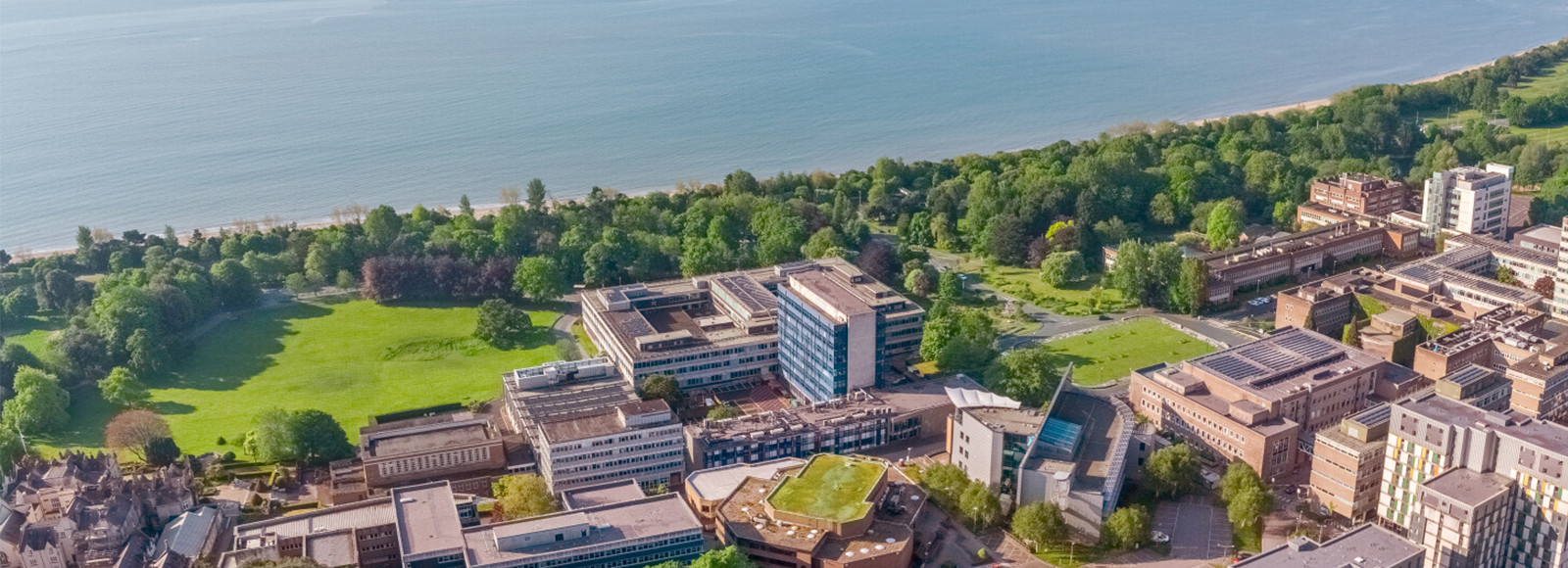
Boost your career prospects by studying a master’s degree at Swansea University Do you want to become part of our vibrant postgraduate community, whi...